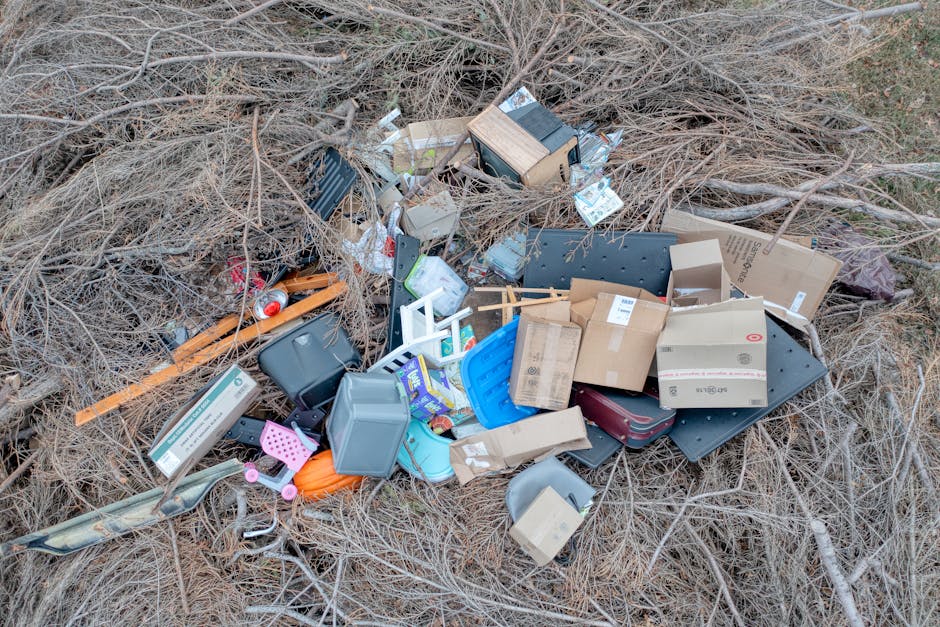
London Council Rules: Fines for Illegal Rubbish Dumping Explained
If you have ever left a bag beside a full bin, parked a sofa "temporarily" by the kerb, or wondered whether a builder's load has crossed the line into illegal dumping, you are not alone. London is strict about waste, and for good reason: fly-tipping clogs streets, attracts vermin, creates fire risk, and leaves councils and residents dealing with the mess. This guide to London Council Rules: Fines for Illegal Rubbish Dumping Explained breaks it down in plain English, so you can understand what counts, what councils can do, and how to stay on the right side of the rules.
We will look at the practical side too, because let's face it, most people do not need a lecture. They need to know what the fine could be, who is responsible, what evidence councils look for, and how to avoid a very expensive misunderstanding.
Table of Contents
- Why this matters in London
- How council fines and enforcement work
- Key benefits of understanding the rules
- Who needs this guidance
- Step-by-step guidance
- Expert tips for staying compliant
- Common mistakes to avoid
- Tools, resources and recommendations
- Law, compliance and best practice
- Options and comparison
- Real-world example
- Practical checklist
- Conclusion
- Frequently asked questions
Why London Council Rules: Fines for Illegal Rubbish Dumping Explained Matters
Illegal dumping is not a small admin issue. It is a real enforcement problem across London, and councils take it seriously because the cost lands on everyone else. A single dumped mattress, broken wardrobe, or builder's rubble pile can quickly become a public nuisance. It can block pavements, encourage more dumping, and make a street look neglected in a matter of hours.
That is why the rules matter whether you are a homeowner, tenant, landlord, tradesperson, or business. If waste is left where it should not be, or handed to the wrong person, the person who arranged it can still face trouble. In some cases, the council may issue a fixed penalty notice. In more serious cases, a prosecution or much larger fine may follow. The exact outcome depends on the facts, local enforcement practice, and whether the case looks accidental, careless, or deliberate.
Practical takeaway: if waste leaves your control, you should still be able to show where it went, who removed it, and whether the collector was authorised. If you cannot show that, you are exposed. Simple as that.
There is also a knock-on effect that people do not always think about. Fly-tipping can lead to repeated complaints, extra inspections, and nuisance around bins and alleyways. On a wet London evening, with black bags split open and the smell hanging in the air, the whole street feels it. Not ideal, to put it mildly.
How London Council Rules: Fines for Illegal Rubbish Dumping Explained Works
At a practical level, councils enforce waste rules by deciding whether rubbish has been dumped unlawfully, who is responsible, and what action is appropriate. The process usually starts with an inspection, report, or evidence gathering exercise. That may include photos, location records, vehicle details, witness statements, CCTV, or the contents of waste that can identify the source.
The phrase "illegal rubbish dumping" is often used broadly, but councils may treat several different situations as unlawful waste activity. These can include leaving waste on the street without permission, placing trade waste in the wrong location, dumping waste on public land, or handing waste to an unlicensed collector. In everyday terms, if the waste is not in the right place or not being managed properly, trouble can follow.
Fines are not always the first or only response. Councils may issue warnings, fixed penalty notices, or notices requiring action. If the case is serious enough, they can escalate it. The key point is that enforcement is evidence-led. The more links there are between the waste and the person or business involved, the more likely the council is to act confidently.
One thing people often miss: councils do not need a confession. If there is enough evidence to show responsibility, that can be enough. A receipt helps. A waste transfer note helps. A clear record of who collected the items helps. Guesswork does not.
What can trigger a fine?
- Leaving household waste beside a full communal bin
- Placing bulky items out too early or without permission
- Handing waste to an unlicensed operator
- Dumping building materials, soil, plasterboard, or rubble
- Failing to keep evidence of legal waste disposal
- Allowing waste from a property clearance to be tipped elsewhere
Sometimes it is not even the person who physically dumped the waste who ends up in difficulty. If you paid someone cheaply to "take it away" and they tipped it down a lane off the A-road somewhere, the council may still look at the original owner of the waste. That is the part many people regret later.
Key Benefits and Practical Advantages
Understanding the rules is not just about avoiding penalties. It also makes waste disposal easier, cleaner, and less stressful. Once you know what councils expect, you can plan collections properly, choose the right disposal route, and avoid last-minute panic when a pile of rubbish starts growing in the hallway.
Here are the main practical advantages:
- Lower financial risk: you reduce the chance of fixed penalties or follow-up enforcement.
- Cleaner property management: waste leaves faster and in a controlled way.
- Better evidence trail: you can prove lawful disposal if questioned later.
- Less neighbour friction: no awkward complaints about bags, smells, or blocked access.
- More reliable planning: especially useful for clearances, renovations, and move-outs.
For landlords and agents, there is a quieter but important benefit too: fewer disputes. If a tenant or contractor leaves mess behind, a simple record of what was done and when can save a lot of back-and-forth. And honestly, a lot of headache.
If you are dealing with larger loads, it can also make sense to compare council options with private collection routes such as bulk waste collection or rubbish clearance, depending on the size and type of items. Not every job needs the same solution.
Who This Is For and When It Makes Sense
This guidance is useful for almost anyone who creates, stores, moves, or pays someone else to remove waste in London. That includes residents clearing out a flat, businesses handling trade waste, landlords after a tenancy, and tradespeople removing debris from worksites. If rubbish is part of your day-to-day, this is for you.
It makes particular sense in the following situations:
- You are clearing a home, loft, garage, or office and need a lawful disposal route
- You have bulky items that do not fit standard collection arrangements
- You are unsure whether a collector is properly licensed
- You are responsible for builders' waste or renovation debris
- You manage several properties and need a sensible record-keeping process
For example, if you are emptying a flat in a hurry after a move, it is tempting to use the first cheap option that appears online. But that is exactly where problems creep in. The price might look good. The outcome, not so much.
In many cases, services like house clearance, office clearance, or builders waste clearance are a more controlled way to stay compliant and avoid the guesswork that comes with informal dumping arrangements.
Step-by-Step Guidance
If you want to avoid fines and keep waste handling tidy, use a simple process. It does not need to be complicated. In fact, the simpler it is, the more likely you are to stick to it.
- Identify the waste type. Household, bulky, trade, electrical, garden, and construction waste all have different handling needs.
- Separate reusable or recyclable items. This helps reduce volume and may lower disposal costs.
- Check who is responsible. If you are the property owner, tenant, contractor, or business, note your role in the waste chain.
- Choose a lawful disposal route. Use council services, a licensed carrier, or a reputable clearance service.
- Keep proof. Save receipts, booking confirmations, waste transfer records, and photos if relevant.
- Set a collection time that works. Do not leave waste out early where it can look abandoned.
- Confirm removal. Make sure the waste is actually taken away, not just moved to a different corner.
If you are unsure about the best route, start with the size and nature of the load. A single sofa is not the same as a kitchen rip-out. A bag of clothes is not the same as plasterboard. Obvious, yes, but this is where people get caught out.
For awkward or mixed loads, services such as large item collection, furniture removal and collection, and waste collection can be practical alternatives to leaving items outside and hoping for the best.
Expert Tips for Better Results
In our experience, the best way to avoid trouble is to treat waste like a record-keeping job, not just a tidy-up job. That shift in mindset makes all the difference.
- Keep a photo trail. Before-and-after photos are helpful, especially for clearances and contractor jobs.
- Use written confirmations. A message or invoice showing what was collected, when, and by whom is better than memory.
- Ask where the waste goes. A serious operator will not mind telling you how it is handled.
- Be careful with "too cheap to be true" offers. If the price sounds unrealistically low, ask why.
- Separate hazardous or specialist items. Fridges, mattresses, and white goods need more careful handling.
A small detail can save a lot of grief later. For example, if you are clearing a rental property on a Friday afternoon, keep a note of the collection time and the contractor's vehicle details. It takes two minutes. It may save two weeks of stress.
Also, if you are dealing with repeated waste in a business or managed building, it can help to set a routine. Regular pickups are usually less messy, and far less embarrassing, than emergency clearances after things pile up by the service entrance.
Useful related services can include commercial waste collection and recycling and rubbish, especially where you want a clearer system rather than one-off improvisation.
Common Mistakes to Avoid
Most fines do not happen because someone set out to break the rules. They happen because people assume the job is simple and make one avoidable mistake. Here are the big ones.
- Leaving waste on the pavement too long. Even if you intend to remove it later, it can still be treated as dumped if it looks abandoned.
- Using an unlicensed collector. This is one of the easiest ways to create a problem for yourself.
- Mixing different waste types. A mixed load can be harder and more costly to manage properly.
- Assuming the council will sort it out. Councils enforce rules; they are not there to rescue poor planning.
- Throwing away evidence. Receipts and emails are dull, sure, but they matter.
Another mistake is to think "it was only one item." In London, one item can still be enough if it was placed unlawfully or collected by the wrong person. One bag, one mattress, one pile of rubble. The scale changes the response, but not the fact that rules still apply.
And yes, there is a bit of irony here: the quickest way to avoid a waste problem is usually to slow down for five minutes and check the basics. Annoying, but true.
Tools, Resources and Recommendations
You do not need complicated software to manage waste properly. You do need a simple system that helps you track what left the property, how much there was, and who handled it. That is the real-world difference between tidy compliance and crossed fingers.
- Booking records: keep confirmations for collections, even for small loads.
- Waste logs: basic notes on dates, items, and contractor details can be enough for many situations.
- Photo records: especially useful for clearances, end-of-tenancy jobs, and shop or office move-outs.
- Property handover notes: helpful if the waste issue sits between landlord, tenant, and contractor responsibilities.
- Routine collection planning: useful for offices, shops, and managed buildings with predictable waste output.
If you need help with heavier, awkward, or repetitive waste, services such as furniture clearance, garage clearance, and home clearance can be more practical than trying to piece together a last-minute solution. For businesses, a planned approach through business waste removal can make compliance much easier to maintain.
If you are comparing options, it can also help to look at the provider's policies on safety, security, and disposal standards. A little due diligence now is far better than trying to explain a mystery pile in the back lane later.
Law, Compliance, Standards, or Best Practice
Without getting lost in legal jargon, the basic compliance message is simple: waste should be stored, moved, and disposed of lawfully, and the person responsible should be able to show evidence that they did the right thing. London councils can enforce against fly-tipping and related waste offences, and penalties can increase depending on severity, repeat behaviour, and whether the case appears deliberate.
Good practice usually includes the following:
- Use properly authorised waste collection routes
- Keep clear records of what was removed
- Do not leave bags or items in public spaces without permission
- Separate recycling where practical
- Make sure anyone handling your waste is suitable for the job
For commercial settings, the standard of care is even higher. Businesses are expected to manage waste responsibly and not rely on vague arrangements or verbal promises. A written booking, invoice, or transfer note is not bureaucracy for the sake of it. It is the paper trail that helps protect you if questions arise.
Best practice is also about reputation. A clean frontage, a tidy rear yard, and a sensible collection routine all send a message that the property is managed properly. That matters in London, where one overflowing bin area can become a neighbourhood talking point by lunchtime.
Options, Methods, or Comparison Table
There are a few common ways to deal with rubbish in London. The right one depends on volume, urgency, item type, and whether you need a record of lawful disposal. Here is a simple comparison.
| Option | Best for | Advantages | Watch-outs |
|---|---|---|---|
| Council collection | Standard household waste and some bulky items | Familiar process, local route, clear official structure | May be slower, limited item types, booking rules can apply |
| Private clearance service | Mixed loads, urgent removals, large clear-outs | Flexible, faster, useful for awkward jobs | Must be checked carefully for responsible disposal |
| DIY transport to a facility | Smaller loads if you have time and transport | Direct control over the process | Requires effort, correct sorting, and proper handling |
| Leaving items out | Very limited situations only | Easy in theory | High risk if not authorised; can look like dumping fast |
For most people, the sensible route is either a council-approved collection or a reputable private clearance service. The risky bit is the middle ground: informal handovers, unmarked vehicles, and vague "mate of a mate" arrangements. That is where things go sideways.
Case Study or Real-World Example
Picture a small flat in north London after a move-out. There is a broken bed frame, a worn sofa, several bags of mixed household items, and a chest of drawers that will not fit in a car. The residents are tired, the lift is slow, and the weekend is closing in. Someone says, "Let's just put it outside for a bit and see what happens."
That small decision can create a problem. If the items are left by the pavement without permission or booking, the pile can be treated as unlawfully placed waste. If a neighbour complains, the council may inspect the scene. If the items are then moved again by an unauthorised person and dumped elsewhere, the original household may still be dragged into the story.
The better approach would have been to book a lawful collection, keep a record of what was taken, and remove the items before they became street clutter. In that same situation, a service such as sofa removal and collection or bed disposal would have handled the bulky pieces without leaving them exposed. Simple choice, better outcome.
It is a small example, but it mirrors what happens all over the city. A little delay, a little uncertainty, and suddenly the waste is no longer "being sorted out." It is now a council issue.
Practical Checklist
Use this checklist before you put anything out or hand waste to someone else.
- Have I identified what type of waste this is?
- Do I know who is responsible for arranging removal?
- Is the collection route lawful and suitable for this load?
- Have I kept a booking confirmation, receipt, or written note?
- Am I sure the collector is appropriate for the job?
- Have I avoided leaving items in a public place without permission?
- Do I have photos or a short record in case questions come up later?
- Have I separated recyclable or specialist items where practical?
- Will the waste be removed promptly, not left to sit around?
- Would I be comfortable explaining this disposal choice to a council officer tomorrow?
If the answer to the last question feels shaky, pause and rethink it. That gut feeling is often useful. Not glamorous, but useful.
Get a free quote today and see how much you can save.
Conclusion
Illegal rubbish dumping rules in London are stricter than many people expect, but the logic is straightforward: if waste is yours, you are responsible for making sure it is removed properly. Councils look at where the waste was left, who arranged the disposal, and whether the trail shows lawful handling. Fines can follow when that trail is missing or when the waste ends up in the wrong place.
The safest approach is also the least stressful one. Plan the collection, keep proof, use a proper service, and do not assume that a cheap shortcut is a clever shortcut. More often than not, it is the opposite.
Truth be told, the people who avoid waste fines are usually not lucky. They are just organised enough to keep a paper trail and think two steps ahead. Boring? Maybe. Effective? Absolutely.
And if you are standing there with a pile of rubbish by the door, take a breath. The fix is usually simpler than the mess makes it look.
Frequently Asked Questions
What counts as illegal rubbish dumping in London?
Anything placed or left in a location where it is not permitted can count, including bags, bulky items, trade waste, or construction debris left on public land, by bins, or in alleyways without authorisation.
Can a council fine me if someone else dumped the waste?
Possibly, yes. If the waste can be linked to you, your property, or your contractor, the council may investigate your responsibility even if you did not physically dump it yourself.
How much is the fine for illegal rubbish dumping?
The amount can vary depending on the circumstances, council policy, and the seriousness of the case. Some cases begin with fixed penalty notices, while more serious matters can lead to larger penalties or prosecution.
Is putting rubbish next to a full bin the same as fly-tipping?
It can be. If the waste is left outside the proper collection system and appears abandoned, councils may treat it as unlawful dumping or a related waste offence.
Do I need proof when I hire someone to remove rubbish?
Yes, absolutely. Keep receipts, booking confirmations, and any written record showing what was removed and who collected it. That paperwork can matter a lot later.
What should I do if I think my waste was dumped illegally by a collector?
Gather any evidence you have, such as messages, receipts, vehicle details, or photos, and report the matter to the relevant council. Keep your own records safe while the issue is looked into.
Are businesses treated differently from households?
They are often expected to show a stronger level of record-keeping and responsibility, especially where trade waste or regular commercial collections are involved.
Can bulky items like sofas and mattresses be left outside for collection?
Only where the collection has been arranged and the items are placed according to the relevant rules. Leaving them out early or without permission can create a fly-tipping risk.
What is the safest way to dispose of builders' waste in London?
Use a lawful collection route that is suitable for construction debris, and keep a clear record of the removal. Builders' waste can be heavy, mixed, and more tightly controlled than household rubbish.
Do councils always prosecute illegal dumping cases?
No. The response can range from advice and warnings to fixed penalties or prosecution. The outcome usually depends on evidence, seriousness, and whether the behaviour looks repeated or deliberate.
How can I reduce the risk of a fly-tipping fine?
Use a reliable collection method, keep proof of disposal, do not leave waste unattended in public spaces, and avoid unlicensed collectors. That combination prevents most avoidable problems.
Where can I get help with larger rubbish loads?
If the job is bigger than a standard bin collection, a planned clearance service can help. Options such as waste removal or bulky waste collection are often more practical for larger loads and awkward items.