Recycling & Sustainability — Garbage London
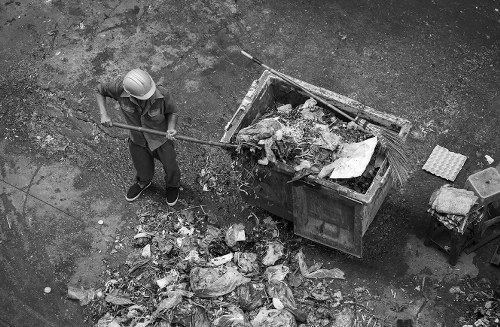 At Garbage London we place sustainability at the centre of everything we do. Our mission as a London waste specialist — whether you search for "Garbage London" or "waste management London" — is to reduce landfill, boost reuse and ramp up recycling. We have set a clear recycling percentage target: a 65% household recycling rate by 2030 across our operational boroughs. That target is ambitious, rooted in local needs, and informed by borough-level recycling strategies.
We work within the fabric of the capital, aligning our services with boroughs' approaches to waste separation. Many councils operate separate kerbside collections for dry recycling, glass, food waste and general refuse; Garbage in London supports those systems by providing tailored collections, public education and partnership programmes so residents and businesses can separate waste correctly.
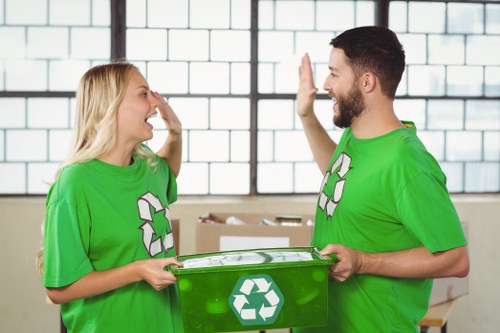 Our practical operations are enabled by a network of local transfer stations. We liaise with transfer depots across east, south and north London, including facilities serving Hackney, Southwark and Waltham Forest. These local transfer stations shorten haul distances, reduce emissions and speed material sorting — a major advantage for London garbage logistics and the circular economy.
Reducing carbon from collection is a priority. Our fleet transition plan replaces older diesel vans with low-carbon vans: a mix of fully electric vans, plug-in hybrids and Euro 6 low-emission vehicles where appropriate. These low-carbon Garbage London vehicles operate on optimized routes to reduce mileage and emissions, and many of our drivers are trained in eco-driving techniques to further cut fuel use.
 Partnerships with charities are a core part of our reuse strategy. We collaborate with food redistribution groups such as The Felix Project, and support furniture banks and community reuse organisations that repair and redistribute household items. By diverting good-quality goods away from landfill we create social value while meeting sustainability goals.
Our recycling and sustainability programme includes community reuse events, mattress and large-item collections for reuse, and targeted campaigns to reduce contamination in recycling streams. In collaboration with boroughs we pilot sorting trials for mixed plastic, glass and paper to identify the most effective local solutions for London garbage streams.
Local Transfer Stations & Resource Recovery
Transfer stations are hubs where materials are consolidated, pre-sorted and sent to appropriate recycling or recovery facilities. We prioritise partnerships with depots that have strong material sorting facilities and links to regional recycling plants. Our logistics planning ensures that materials collected in east London or west London are routed to the best available processing plants, minimizing energy use and transport emissions.
How we work with charities and community partners
Garbage in London supports reuse through direct partnerships and by offering secure collection windows for charity collections. Typical partnership activities include:
- Food redistribution: Collecting surplus food for organisations that feed vulnerable Londoners.
- Furniture and textiles: Coordinating collections for furniture banks and cloth-reuse centres.
- Community repair: Hosting or sponsoring repair cafés and refurbishment workshops.
We measure progress and report on key metrics: recycling percentage, tons diverted for reuse, and emissions reduced through our low-carbon van fleet. Transparency is important; our internal targets are aligned with borough plans and national waste reduction objectives so that our work contributes to measurable reductions in London garbage sent to landfill.
 Operational improvements also include route optimization software, seasonal scheduling adjustments (to reflect recycling pattern changes across boroughs), and investments in staff training to lower contamination rates. Small changes in collection frequency, container design and public signage can produce large gains in recycling quality across inner and outer London boroughs.
 At Garbage London we believe sustainable waste services are about people as much as technology. By working with councils, local transfer stations and charity partners, and by investing in electric and low-emission vehicles, we aim to transform how London handles rubbish and recycling. Our focus remains on raising the recycling rate, expanding reuse, and cutting the carbon footprint of London garbage — a cleaner, greener city for everyone.
Keywords used: Garbage London, Garbage in London, London garbage, recycling London, waste management London.